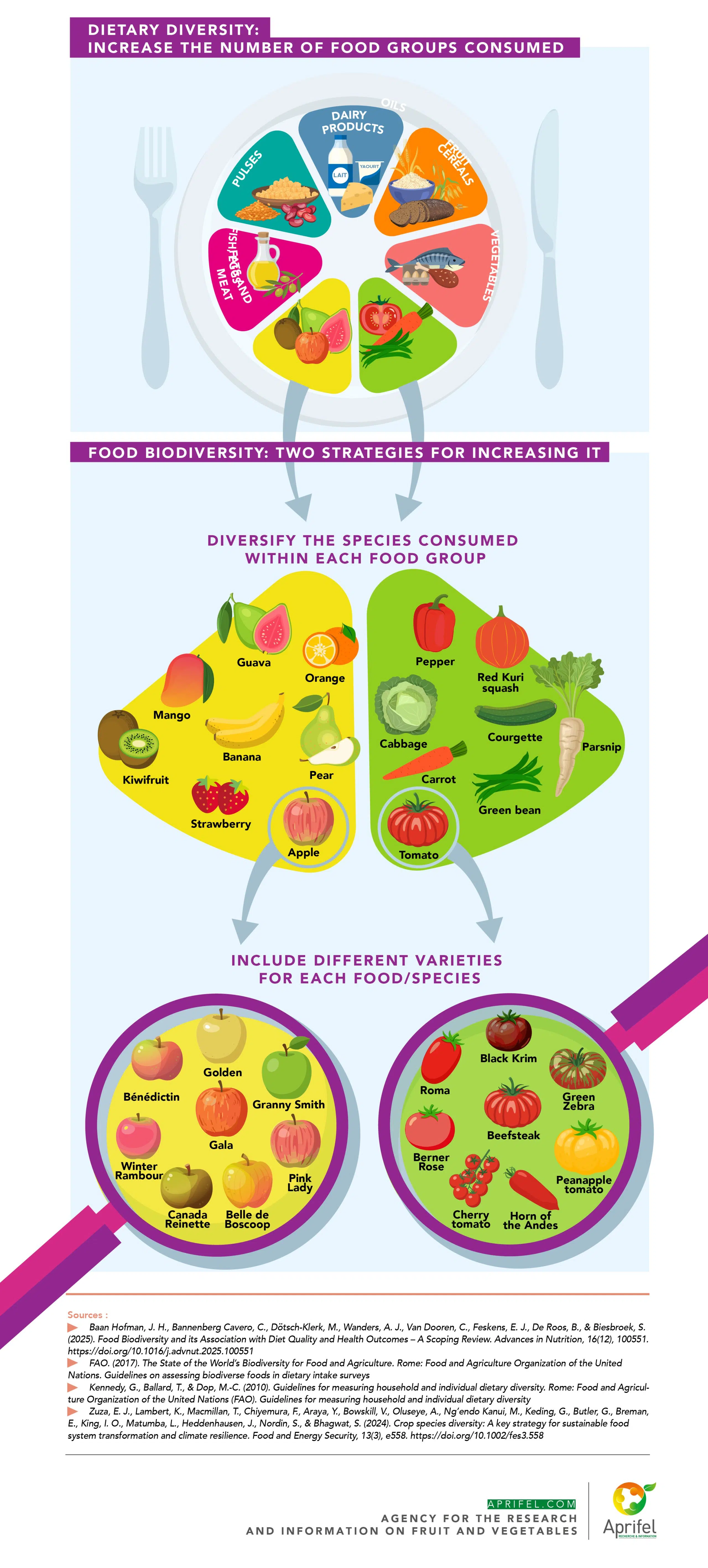
Infographic – Food biodiversity: a promising concept for a more sustainable diet
Complementary to dietary diversity – the number of different food groups or foods consumed over a given period (Kennedy et al., 2010) – food biodiversity refers to “the diversity of plants, animals and other organisms used for food, encompassing genetic resources within and between species, as well as those provided by ecosystems”. (FAO, 2017).
Thus, a diet can be diversified without necessarily involving high food biodiversity, if it is based mainly on a single species within each food group: for example, wheat or rice for cereal products.
By promoting the production and consumption of a wider variety of species, greater food biodiversity would help to reduce the vulnerability of food systems to climate, health and economic shocks, whilst strengthening their resilience and adaptive capacity (Zuza et al., 2024).
Furthermore, several studies have shown that a diet based on greater food biodiversity has significant beneficial effects on health including, in particular, a reduced risk of all-cause mortality and of gastrointestinal cancers (Baan Hofman et al., 2025).