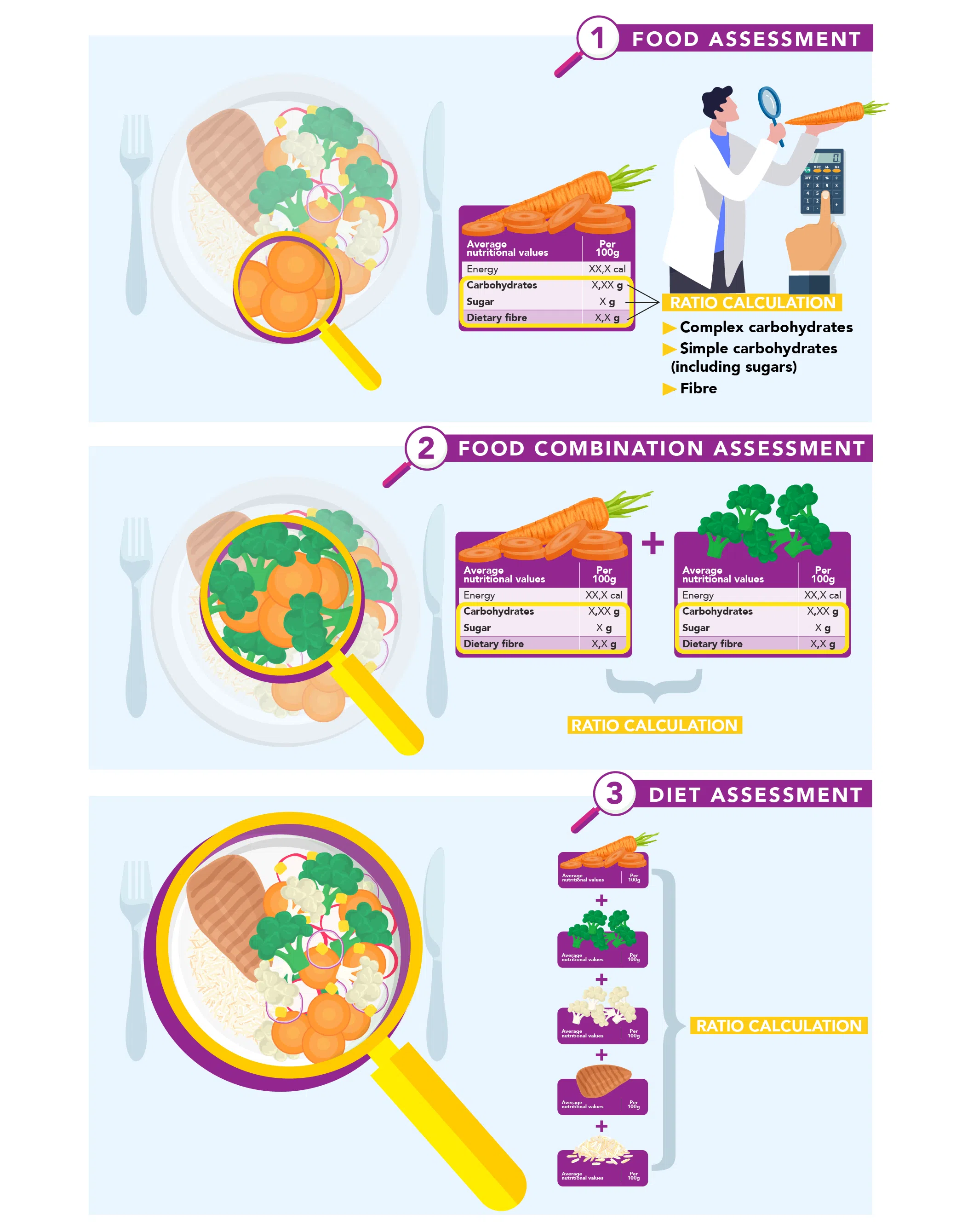
Infographic – What indicators for assessing the quality of foods containing carbohydrates ?
The quality of diets is directly linked to the composition of the foods consumed, i.e. their content of energetic compounds – carbohydrates, lipids and proteins – and micronutrients – vitamins, minerals. This infographic focuses on carbohydrates, the body’s main energy contributors. The quality of carbohydrate-containing foods is traditionally assessed using the glycemic index and/or glycemic load which focus on the body’s physiological response to the consumption of these foods. However, these indicators do not consider factors such as the dietary matrix, the presence of other nutrients and inter-individual variability.
New multimodal metrics have recently been elaborated to take these factors into account and thus provide a better indication of the quality of foods containing carbohydrates. These new metrics are based on different ratios integrating key nutrients such as :
- the nutritional composition of foods and products, more specifically the total carbohydrate or fibre
content, - the quantity of added sugar (in products).
For example, dietary fibre plays an essential role in regulating glycemia and satiety (Campos et al., 2022).
Conversely, free sugars, present in many processed foods, are often associated with increased risks of
non-communicable diseases (WHO, 2015).
These indicators can also incorporate additional parameters, such as glycemic index, whole-grain content or liquid/solid carbohydrate ratio. By integrating these criteria, this more holistic approach can be applied to both a single food and a combination of foods, reflecting the quality of the diet and pointing the way to healthier food choices and better nutritional quality.