Nutrition
Carbohydrates
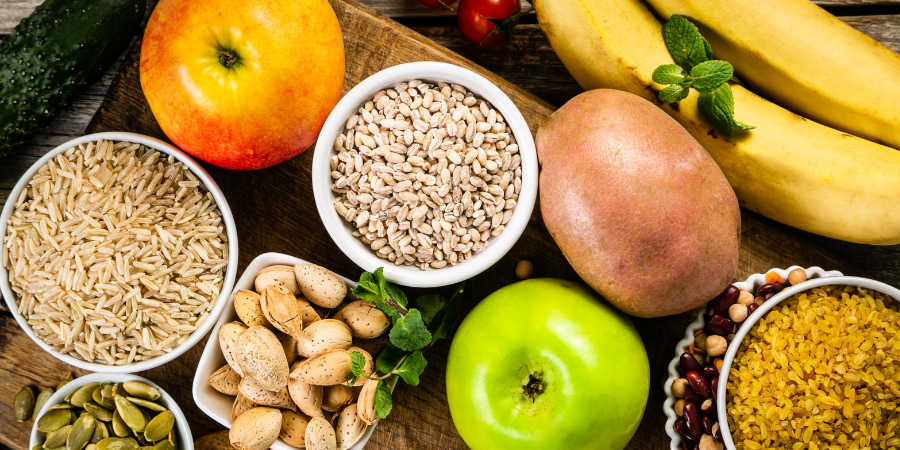
As the main source of energy in our diet, carbohydrates account for between 55 and 80% of daily energy intake. Essential for the body, they are found primarily in plant-based foods. However, not all carbohydrates have the same health effects. Here are some explanations and recommendations for optimising your carbohydrate intake.
Carbohydrates : a diverse group of compounds whose definition is still under debate
Carbohydrates are chains of simple sugar units, known as monosaccharides. They are classified according to the number of units they contain, known as the degree of polymerisation:
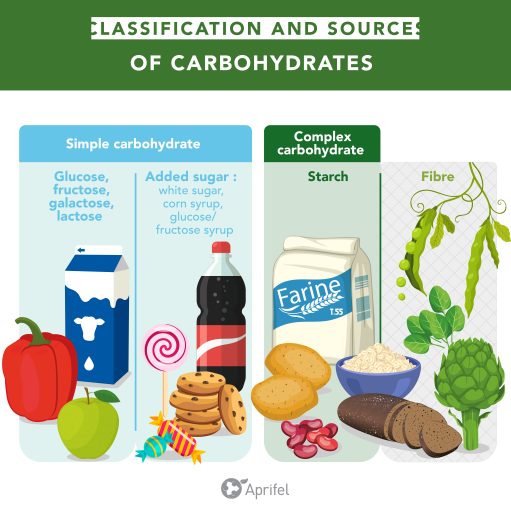
- Sugars include mono- and disaccharides such as glucose, fructose, sucrose and lactose.
- Oligosaccharides, or short-chain carbohydrates, are found in breast milk and are often linked to lipids or proteins.
- Polysaccharides are complex carbohydrates, and include starch and glycogen.
Dietary fibre is also a type of complex carbohydrate, but unlike the others, it cannot be digested by the body. It is sometimes classified differently from other carbohydrates. Moreover, some definitions prefer to distinguish between simple and complex carbohydrates, but this distinction is not always obvious and is a matter of debate.
Free sugars refer to the mono- and disaccharides added to food and beverages by manufacturers, cooks or consumers, as well as the sugars naturally present in honey, syrups and fruit juices, including those made from concentrate (WHO, 2015).
Carbohydrates: the body’s main source of fuel
The main role of carbohydrates is to provide energy to the body in the form of glucose, which is essential for:
- the brain, which relies on it as its sole source of energy,
- other organs and tissues (muscles, heart, etc.).
More specifically, the oxidation of glucose produces adenosine triphosphate (ATP), a source of cellular energy, with an energy value of 4 kcal per gram. Excess glucose is stored as glycogen in the liver and muscles, or converted into triglycerides in adipose tissue.
Blood sugar levels fluctuate throughout the day depending on diet and physical activity, but remain regulated at around 1 g/L. Unlike glucose, fructose is metabolised by the liver, where it can promote the accumulation of fatty acids if consumed in excess, as there is no self-regulatory mechanism. Because it is metabolised differently, fructose does not cause a spike in blood sugar levels (ANSES, 2016).
Carbohydrates are also essential for the structure of our cells, tissues and organs, and for regulating metabolism.
Carbohydrate quality : a key driver in the prevention of non-communicable diseases
Non-communicable diseases – diabetes, obesity, cardiovascular disease and cancer – are the leading cause of death worldwide (WHO, 2022). Diet, and carbohydrate quality in particular, plays a key role in the prevention of these diseases (WHO, 2023).
This idea of quality mainly refers to:
- the type and composition of carbohydrates (including sugars) in a food or in the diet;
- the rate at which they are metabolised;
- the amount of dietary fibre they contain (WHO, 2023).
“High-quality” carbohydrates are digested slowly and are often high in fibre, enabling the glucose to be released gradually into the blood. A high intake of dietary fibre and the consumption of foods rich in high-quality carbohydrates – whole grains, fruit, vegetables, pulses – is associated with a significant reduction in the risk of non-communicable diseases and premature mortality (WHO, 2023).
Conversely, rapidly digested carbohydrates, such as sugars, are regarded as “low quality”. They cause spikes in blood sugar levels, which promote the occurrence of metabolic diseases (Haber et al., 1977). Excessive consumption of sugars, particularly those found in processed foods and sugar-sweetened beverages, significantly increases the risk of diet-related diseases (Olmedo et al., 2024; WHO, 2023; Campos et al., 2022).
A number of scientific indicators have been developed to assess carbohydrate quality and guide dietary choices towards healthier options. The glycaemic index is one of the most widely used indicators for classifying foods according to their potential to raise blood sugar levels. Nevertheless, it has certain limitations, leading the scientific community to develop new indicators, which consider total carbohydrates, fibre and added sugars, for example.
A variety of food sources
Carbohydrates are found in many foods:
- Glucose: fruit, vegetables, cakes and biscuits
- Fructose: fruit, vegetables, honey, cakes and biscuits
- Sucrose: mainly in processed foods
- Lactose/galactose: dairy products
- Starches: products containing wheat, cereals, pulses and tubers (potatoes, sweet potatoes, etc.)
- White sugar, corn syrup, glucose/fructose syrup: added sugars
Carbohydrate intake : give priority to whole grains, fruit, vegetables and pulses
As the main source of energy, carbohydrates should account for 50 to 55% of total energy intake (AFSSA, 2001). This recommendation is supplemented by more specific guidance regarding the different types of sugar and their sources.
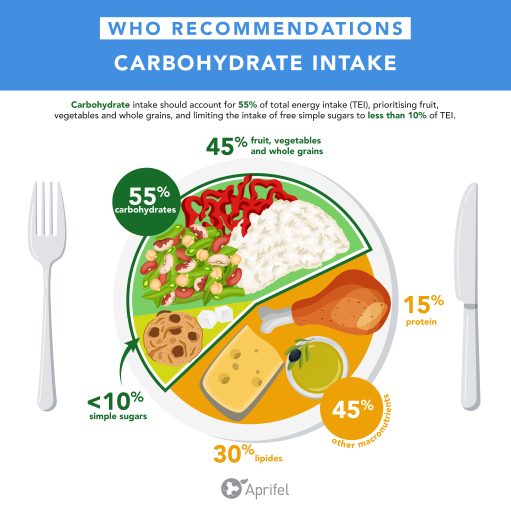
The WHO therefore recommends that carbohydrate intake should come primarily from whole grains, fruit, vegetables and pulses for all individuals 2 years of age and older (WHO, 2023).
In these new guidelines published in 2023, the WHO reiterated the recommendation that adults should consume at least 400 g of fruit and vegetables per day. This recommendation has been adapted for children, to take account of their energy requirements and age:
• 2–5 years, at least 250 g per day
• 6–9 years, at least 350 g per day
• 10 years or older: at least 400 g per day
On the other hand, international guidelines call for the intake of free sugars to be limited to less than 10% of total energy intake (WHO, 2015) and suggest reducing this intake to less than 5% for better health.
ANSES’s recommendations limit total sugar intake to 100 g/day for adults, and 60 g/day for children aged 4 to 7 years.
In France, a large proportion of the population exceeds these recommendations, particularly among children (ANSES, 2024).
- 20 to 30% of adults and adolescents
- 60% of children aged 8 to 12 years, and
- 75% of children aged 4 to 7 years