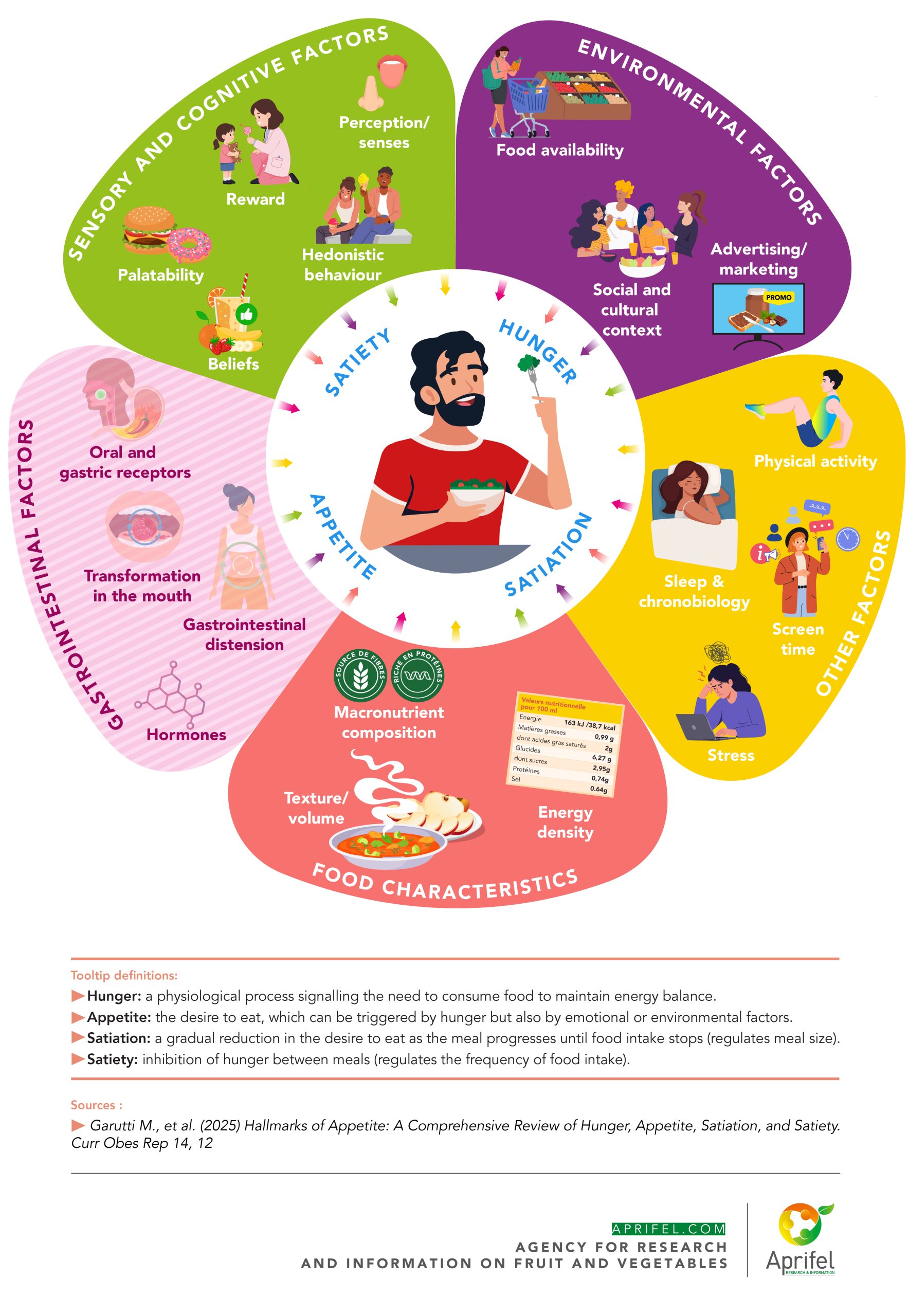
Infographic – Factors involved in regulating food intake
The signals regulating food intake alternate throughout the day, between hunger, appetite, satiation and satiety .
This process is governed in part by physiological mechanisms linked to the gastrointestinal system (hormonal responses, chemical and mechanical transformation of food in the mouth, stretching capacity of the digestive system, etc.). However, beyond these internal regulations, multiple factors also come into play: sensory, cognitive, environmental or related to lifestyle habits (sleep, physical activity, stress, screen time, etc.). So, in food environments where palatable foods are ubiquitous, appetite can be stimulated independently of need. Food regulation may then be disrupted in favour of more obesogenic behaviour.
Satiety is therefore the result of a complex balance between intrinsic biological factors and modifiable external determinants. These are all levers for guiding eating behaviour towards healthier, more diversified and sustainable choices, encouraging the consumption of fruit and vegetables, and allowing more controlled satiety.