
In Europe, fruit and vegetable consumption in children remains well below the health recommendations. To better understand the determinants of this consumption, a recent study explored how children perceive fruit and vegetables. The results showed that, from one child to the next, fruit and vegetable consumption habits range from total dependence on others to a high degree of autonomy. Some children even go as far as developing their own rituals to ensure that they include fruit and vegetables in every meal. This study identified four main types of factors that influence fruit and vegetable consumption: (1) taste and serving style, (2) the impact of others, (3) beliefs about the benefits of these foods, and (4) conscious habits and choices. This study illustrated the importance of addressing various dimensions simultaneously to help children develop healthier habits.
Consuming fruit and vegetables is essential for good health, contributing to the intake of key nutrients and reducing the risk of chronic disease (Aune et al., 2017). That being said, fruit and vegetables are not sufficiently consumed in Europe, in particular by children.
Socio-economic factors, such as parental income and education level, as well as the gender of children, are important determinants of their fruit and vegetable consumption. But other factors also play a key role, including access to fruit and vegetables , taste preferences, family practices and peer influence (Blanchette and Brug, 2005). However, knowledge about what children think of fruit and vegetables and how they view these foods outside meal situations still remains fragmented.
The study conducted by Helgegren et al., 2024 therefore sought to analyse perceptions of fruit and vegetables among Swedish children as well as the factors that underlie the consumption of these foods. This study used a qualitative approach, based on semi-structured interviews with 15 children .
From dependence to autonomy: four types of approaches to fruit and vegetables
Based on the thoughts and experiences shared during these interviews, the authors identified four different types of approaches (attitudes) that determined fruit and vegetable consumption among the children interviewed:
- “The food determines what I eat”
- “Other people determine what I eat”
- “My knowledge determines what I eat”
- “My habits determine what I eat”
These approaches form a continuum, ranging from strong dependence on external influences to autonomy in food choices (see figure below).
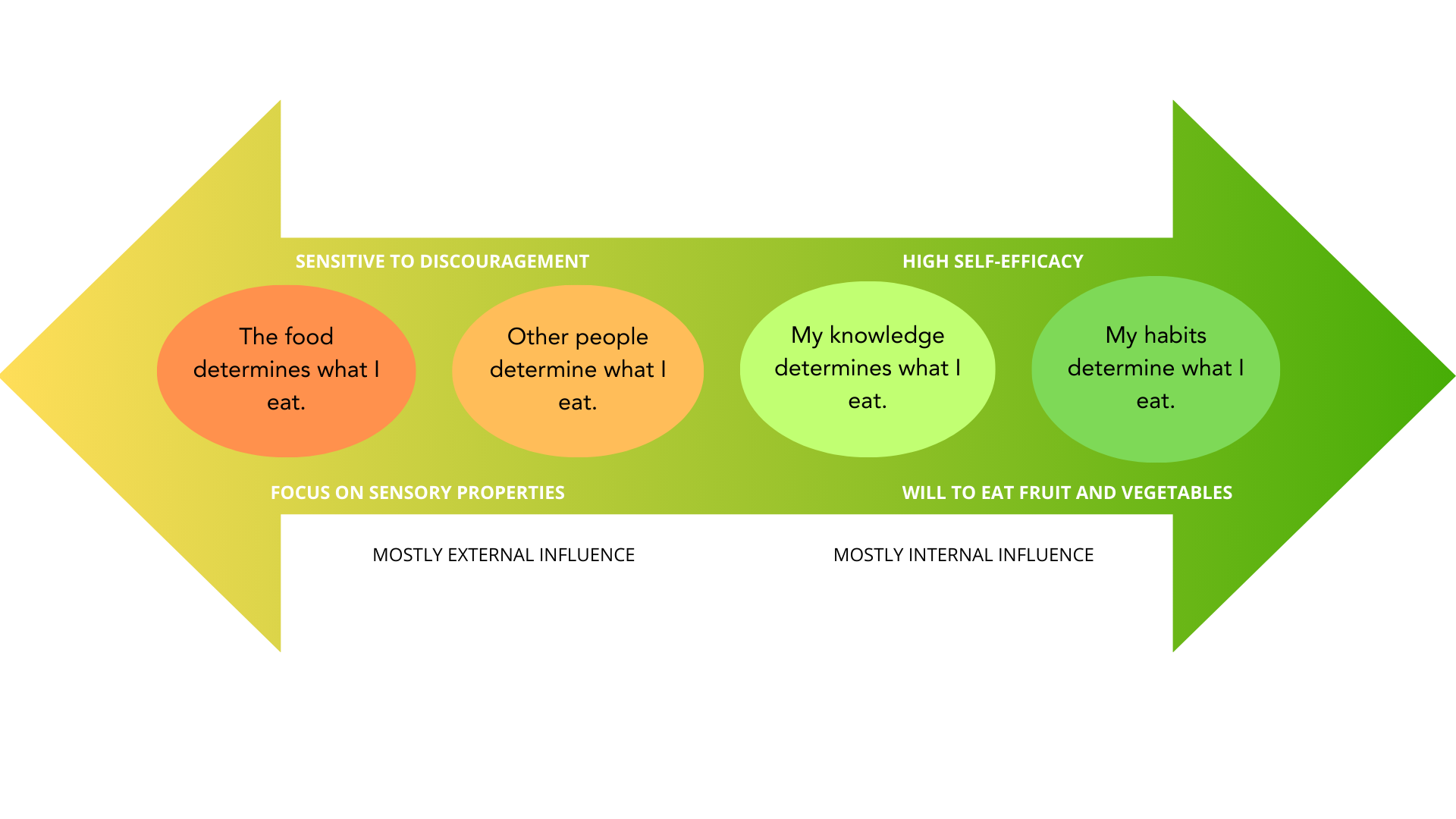
Figure 1: Continuum of influences on children’s food choices (according to Helgegren et al., 2024)
At one end of the continuum, some children are very sensitive to external factors such as the appearance and serving style of food. An unexpected combination or unusual texture can be enough to discourage them from eating. For them, the influence of their parents and peers plays a decisive role in their food choices. Encouragement or criticism influences their willingness to try new foods, as these children tend to imitate the habits of those around them (Blanchette and Brug, 2005; Lehto et al., 2016).
At the other end, some children adopt a more autonomous approach based on their knowledge and habits. These children act intentionally, putting in place strategies such as self-monitoring to balance their diet. For example, some follow personal rules such as “Always at least two colours on the plate” or “Never a plate or meal without colour” and consciously incorporate fruit and vegetables into their daily routine. As children move closer to this end of the continuum, we see enhanced self-efficacy , as well as an increased determination to eat healthy food.
Improving knowledge to encourage children’s food autonomy and conscious choices
All the children interviewed associated fruit and vegetables with health and considered they were good for them. However, the authors point out that their knowledge of the health benefits associated with fruit and vegetables often remained partial. Indeed, the consumption of these foods was mainly associated with simple benefits such as “growing” or “being healthy”. The authors believe that this incomplete or even incorrect knowledge among some children may be a barrier to consumption. Some studies (McEachern et al., 2022) have shown that a better understanding of nutrition leads children to consume more fruit and vegetables. Effective awareness-raising could therefore play a decisive role in improving eating habits from a very young age.
The authors therefore suggest that food education should be strengthened to advance children’s knowledge. They recommend implementing age-appropriate educational programmes, providing children with detailed information about the benefits of fruit and vegetables, as well as the recommended amounts.
Facilitating children’s acceptance of fruit and vegetables through fun and sensory approaches
Improving knowledge alone is not enough to change behaviour. The authors therefore call for action to be taken to change the negative perception that some children may have of fruit and vegetables. Among the approaches recommended in this study, the Sapere methodology , which is widely used in schools in Sweden, stands out for its sensory and interactive approach. By encouraging children to explore foods through all five senses, this method helps them develop a more positive relationship with food. Gradually, they learn to associate fruit and vegetables with pleasure and discovery rather than constraint, making it easier for them to adopt a more varied and balanced diet (Swedish Food Agency and Sapere International, 2015).
The study also highlights children’s creative and playful uses of fruit and vegetables outside meal situations, underlining the importance of fun approaches. The authors therefore recommend incorporating play and sensory activities to stimulate children’s curiosity and motivate them to eat a more varied diet. These initiatives are in line with the recommendations of Coe et al., 2024, who advocate interactive experiences to encourage healthy eating habits from a very early age. When learning becomes more fun and engaging, it becomes easier to establish a positive relationship with food.
In conclusion, the authors point out that fruit and vegetable consumption in children depends on a combination of sensory, cognitive and social factors. To encourage children to eat a balanced diet, they recommend taking account of these different dimensions in interventions aimed at promoting healthy eating habits and adapting these interventions at each stage of a child’s development.