Key vitamins provided by fruit and vegetables
Vitamin B9
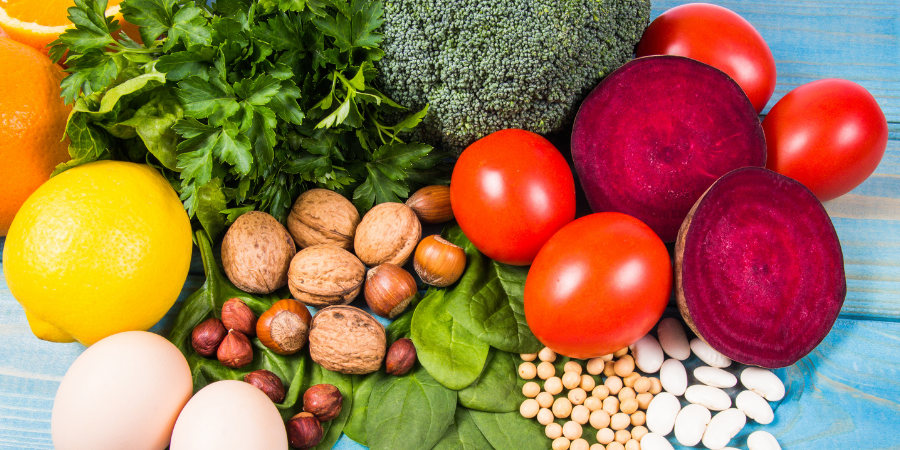
Vitamin B9, also known as folic acid or folates, is vital for the production of genetic material (DNA, RNA) and for cell division. It is particularly important during pregnancy as it plays an essential role in the development of the embryo’s nervous system.
Vitamin B9, essential from birth through to adulthood
Vitamin B9 covers a number of different compounds: folates, which are naturally found in the diet, and folic acid, which is the synthetic form found in fortified foods and supplements (ANSES, 2021). The metabolically active form of vitamin B9, known as tetrahydrofolate, is fully reduced in the body. Folic acid is a precursor of this compound.
Folates contribute to the normal synthesis of amino acids and nucleic acids (DNA, RNA). Vitamin B9 thus plays an important role in the production of genetic material and in cell division (Ellie et al., 2022). These properties explain why vitamin B9 is essential throughout life (ANSES, 2021).
Folates also play a role in structuring the nervous system. In the foetus, at the end of the first month of pregnancy, vitamin B9 enables the neural tube to close, and is therefore essential to the development of the unborn child’s nervous system (ANSES, 2022).
Folates also contribute to the normal formation of blood cells in the blood, the normal functioning of the immune system and to normal psychological functions. Among other things, they help to reduce fatigue (ANSES, 2022). It has also been shown that vitamin B9 has beneficial effects on all-cause mortality, as well as on the prevention of certain non-communicable diseases (cancer, cardiovascular diseases).
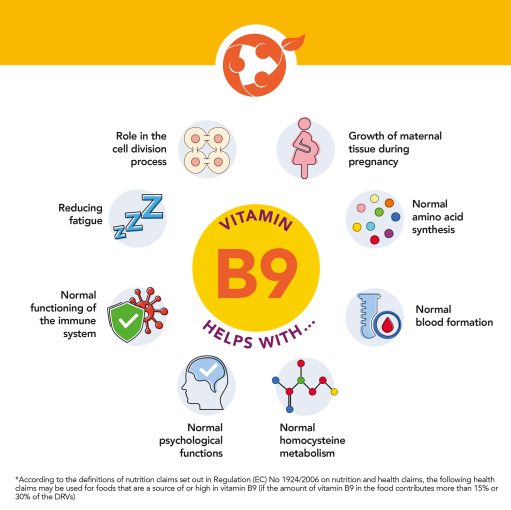
Figure 1 : Main health claims for vitamin B9 (according to ANSES, 2019)
Greater needs in pregnant women
As folic acid has greater stability and bioavailability than folates, the dietary reference values for vitamin B9 are expressed as dietary folate equivalent (DFE) to take these differences into account. Thus, 1 μg of DFE is equivalent to 1 μg of folates and 0.6 μg of folic acid (ANSES, 2021).
The dietary reference values for vitamin B9 were updated by ANSES in 2021, and the values range from 120 to 600 μg of DFE/day depending on the population group. Women who are or wish to become pregnant are the population group for whom the recommended intake is highest (ANSES, 2021).
Table 1 : Population reference intake (PRI) for vitamin B9
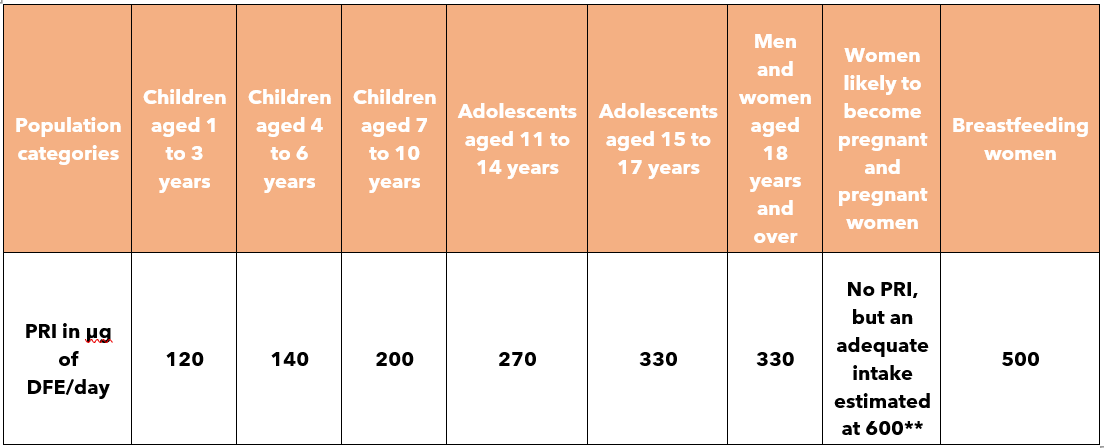
**Value may be overestimated for the second and third trimesters of pregnancy
Fruit and vegetables, the main sources of vitamin B9 intake
As the body is unable to synthesise or store folates, regular intake through the diet is necessary. The main dietary sources of folates are vegetables, especially green vegetables, as well as fruit and vegetable juices and fruit.
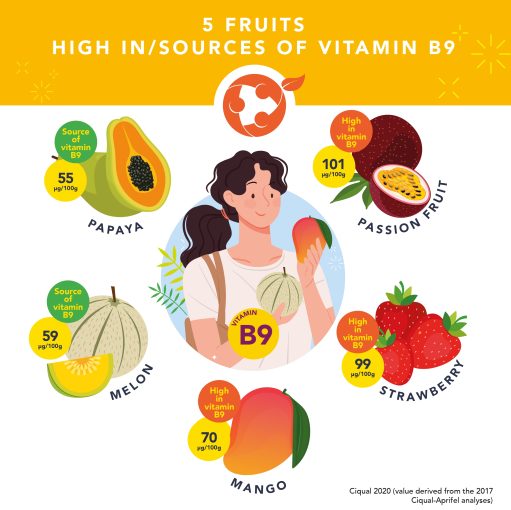
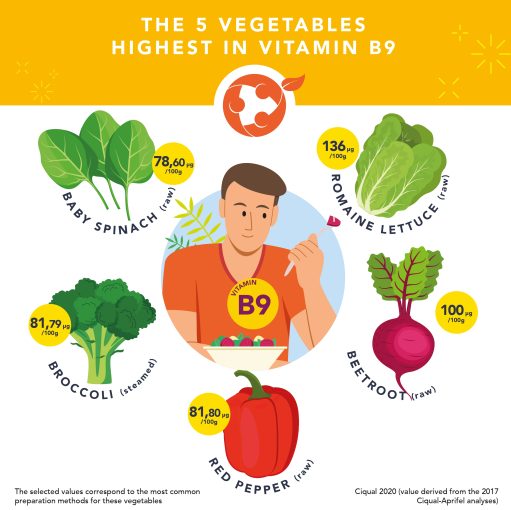
In France, fruit, vegetables and foods made from fruit and vegetables make a major contribution to vitamin B9 intake, accounting for nearly 22% of the intake in children and 30% in adults.
Other foods also contributing to folate intake include pulses, liver and dairy products, as well as brewer’s yeast and wheat germ (ANSES, 2021).
Vitamin B9: needs generally met, but special attention needed from when a woman starts trying for a baby and throughout pregnancy
A vitamin B9 deficiency can cause a slowdown in cell multiplication, with the main symptom being anaemia. It is accompanied by other symptoms such as fatigue, headaches, dizziness, shortness of breath and pallor (ANSES 2022).
A vitamin B9 deficiency is of greater concern in pregnant women as it can lead to foetal developmental abnormalities, in particular “neural tube defects”. These abnormalities can occur during the first month of pregnancy and have adverse effects on development of the brain and spinal cord (ANSES, 2022), which can lead to major disabilities in the unborn child. In France, these abnormalities are seen in nearly 700 births per year (Blin, 2022). Therefore, from the moment a woman starts trying for a baby and until the third month of pregnancy, folate supplementation is recommended (prescribed by a doctor or midwife).
-
Many factors can lead to a folic acid deficiency:
- reduced dietary folate intake,
- chronic alcoholism (malabsorption),
- impaired hepatic uptake,
- increased renal excretion,
- taking medication (Blin,2022).
The ESTEBAN study showed that the prevalence of the risk of serum folate deficiency in adult women of childbearing age almost doubled in the previous 10 years, increasing from 7% in 2006 to 13% in 2015 (ESTEBAN, 2019).
Therefore, from the moment a woman starts trying for a baby, a healthy, varied diet is particularly advisable during this period. According to the recommendations of the French College of Gynaecologists and Obstetricians (CNGOF) and the National Authority for Health (HAS), folic acid supplementation is also necessary in the period leading up to conception (Blin,2022).
Vitamin B9, a vitamin that is sensitive to many factors
Like vitamin C, vitamin B9 is particularly sensitive to air, light and heat. Cooking food gradually destroys it, while brief cooking at a low temperature helps to preserve it.
When cooking foods containing water-soluble vitamins, steaming is preferable and direct cooking should be avoided, as the vitamins are then lost in the cooking water. (Ellie, 2022).
To preserve the folate content of food, particularly fresh vegetables:
- Keep them in the fridge and consume them shortly after purchase ;
- Avoid boiling vegetables for too long, especially if they have been cut into small pieces ;
- Preferably cook them by braising in a small amount of boiling water or steaming (PNNS brochure) ;
- Foods high in vitamin B9 should preferably be eaten raw: in salads or on their own, sliced, whole or in wedges.