Key vitamins provided by fruit and vegetables
Vitamin E
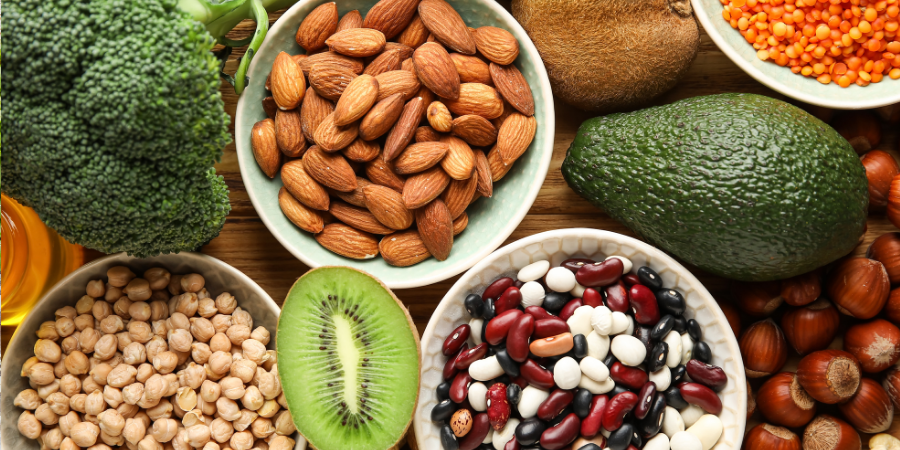
Found mainly in vegetable oils and nuts, vitamin E, or alpha-tocopherol, is a powerful antioxidant that is essential for maintaining cell integrity.
Vitamin E helps to ensure cell integrity
Vitamin E is the collective term for eight vitamin compounds:
- Four tocopherols: alpha, beta, delta and gamma;
- Four tocotrienols: alpha, beta, delta and gamma.
Of these compounds, the most active form and the one maintained in plasma is alpha-tocopherol (ANSES, 2016; Institute of Medicine (US) Panel on Dietary Antioxidants and Related Compounds, Washington (DC), 2000).
Vitamin E – or alpha-tocopherol – is a powerful antioxidant that helps, in particular, to limit lipid oxidation. It thus plays an essential role in protecting the body’s cell membranes against oxidative stress and premature ageing (ANSES, 2021).
Vitamin E acts in synergy with other compounds such as vitamin C, beta-carotene, vitamin B3 and selenium (ANSES, 2021). A diet high in vitamin E can only have an optimal effect if it is also high in foods that provide these other nutrients (Rizvi et al., 2014).
Vitamin E : broadly similar needs across the entire population
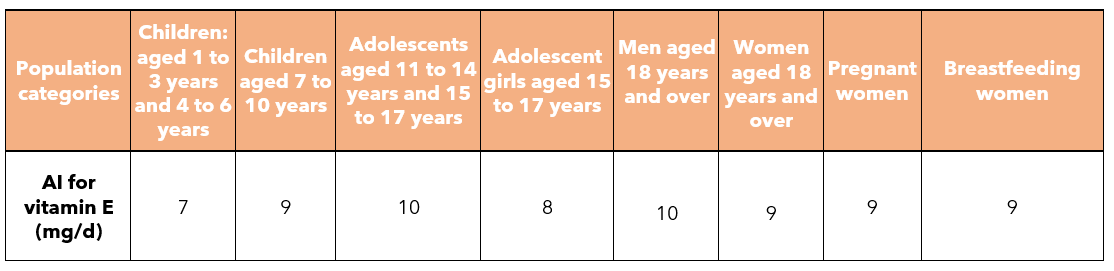
The dietary reference values for vitamin E were updated by ANSES in 2021. The recommendations for this nutrient are based on adequate intakes, due to a lack of scientific data for establishing population reference intakes.
The values range from 7 to 10 mg/day depending on the population group, with the highest levels observed for adolescents aged 11–17 years and men over 18 years (ANSES, 2021).
Table 1 : Adequate intake for vitamin E (mg/d)
Vegetable oils and nuts, the main source of vitamin E intake
As the body is unable to synthesise vitamin E, regular intake through the diet is necessary. Moreover, vitamin E is fat-soluble. To enable it to be absorbed in the gut and metabolised, it must be consumed together with dietary fat.
Vitamin E sources can be of either plant and/or animal origin, but plant-based foods account for the majority of vitamin E intake. The main sources are vegetable oils, cereals (rye, oats), cod liver oil and certain nuts: almonds and hazelnuts (ANSES, 2021).
Fruit and vegetables are not the main contributors but provide a supplementary intake of vitamin E: spinach, red pepper, avocado, etc. According to the INCA 3 study, vegetables account for 6.3% of vitamin E intake in children aged 1–10 years.
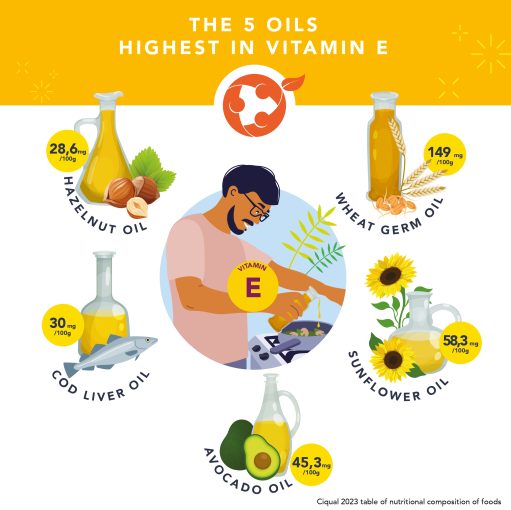
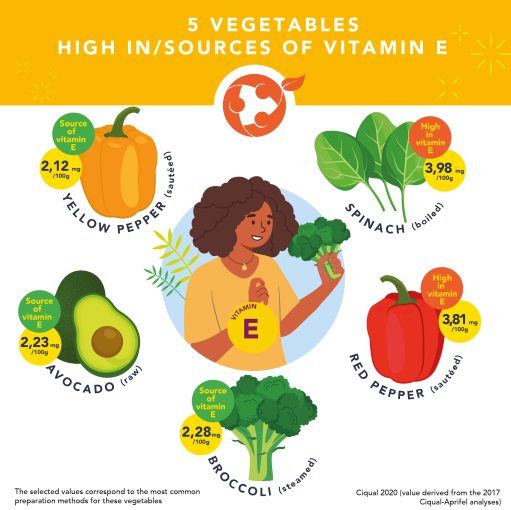
Figure 1 : Top 5 fruit and vegetables sources of vitamin E
Vitamin E deficiencies relatively rare
Vitamin E deficiency is rare in industrialised countries, and only becomes apparent after several years of no intake. It occurs almost exclusively in people suffering from conditions that impair their ability to absorb the vitamin (for example, cystic fibrosis, short bowel syndrome or biliary obstruction) and in people who cannot absorb dietary fat or who have rare fat metabolism disorders (Rizvi et al., 2014).
Deficiencies can lead to haemolytic anaemia
and non-specific neurological disabilities such as ataxia (Rizvi et al., 2014; ANSES, 2021).
Vitamin E toxicity is rare, but high doses can sometimes lead to a risk of bleeding, as well as muscle weakness, fatigue, nausea and diarrhoea (Johnson et al., 2022).