Key vitamins provided by fruit and vegetables
Vitamin K1

Vitamin K comes in two main forms: vitamin K1 and vitamin K2. Vitamin K1 is found mainly in green vegetables and certain vegetable oils, while vitamin K2 is found primarily in offal and fermented products. Vitamin K plays a role in blood clotting and bone metabolism.
This article focuses primarily on vitamin K1, which is found mainly in vegetables.
A vitamin involved in blood clotting
Depending on its form, there are two health claims for vitamin K:
- Vitamin K contributes to normal blood clotting (ANSES, 2021), (Regulation (EU) No 432/2012), (Mladěnka P et al., 2022).
- Vitamin K2 plays a part in bone metabolism (ANSES, 2021)
A dietary vitamin K deficiency is rare. However, a deficiency can lead to impaired fat absorption. Moreover, a vitamin K1 deficiency can lead to blood clotting disorders (ANSES, 2021). Nevertheless, vitamin K needs can be met through a varied, balanced diet.
Note: individuals taking anticoagulant medication must ensure that they do not eat foods high in vitamin K.
Needs that change throughout life
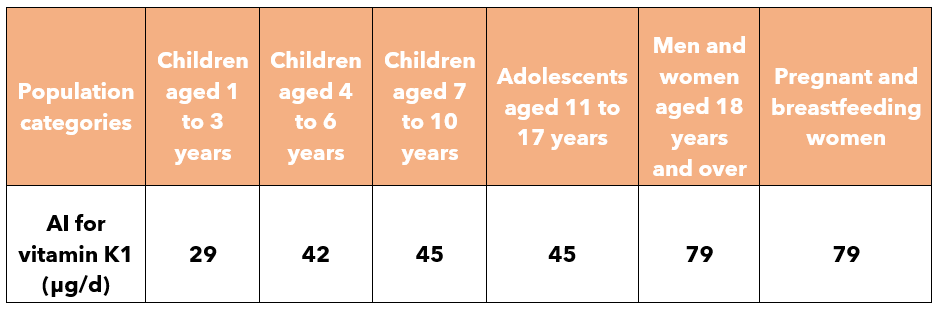
According to the most recent update from ANSES, the recommendations for vitamin K1 are based on adequate intakes, due to a lack of scientific data for establishing population reference intakes. The adequate intake set for vitamin K1 is around 79 µg per day for an adult. Values vary according to gender and age, but also depending on physiological state (see Table 1 below) (ANSES, 2021).
Table 1 : Adequate intake for vitamin K1 (µg/d)
A vitamin found mainly in green vegetables and certain vegetable oils
Vitamin K1 is found mainly in dark green leafy vegetables such as salad leaves, cabbage and spinach, but also in certain types of fruit – blackberries, blueberries and kiwi fruit, as well as in vegetable oils (ANSES, 2021).
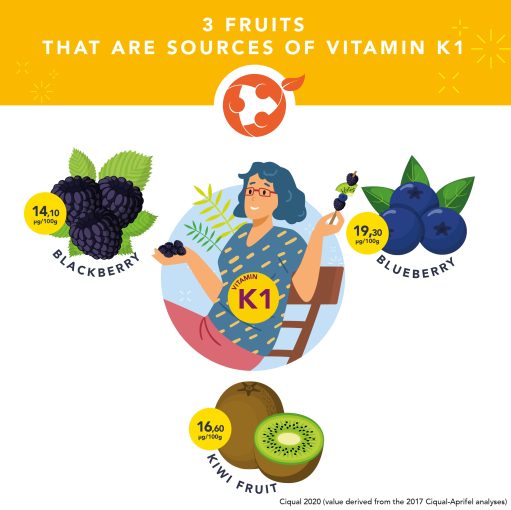
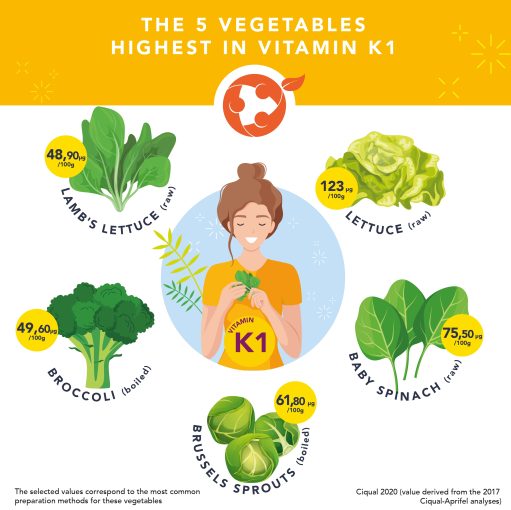
Figure 1 : Fruit and vegetables source of vitamin K1
A light-sensitive vitamin
Vitamin K1 is heat-resistant but is particularly sensitive to light: both daylight and fluorescent light. It is therefore recommended that foods containing vitamin K1 be stored away from direct light, preferably in opaque packaging (Mladěnka P et al., 2022).