In October 2025, the EAT-Lancet Commission, a pioneer in the development of sustainable diets, published an updated version of its planetary health diet. Two key new features have been included in this update: a specific cultural adaptation of the proposed diet and a call for food systems that are more just. The aim is to offer a more flexible, fairer and more operational reference for supporting the transformation of our consumption patterns.
Our societies face a major challenge: how to ensure sufficient, healthy food for almost 10 billion people, while minimising the impact of food systems on the planet.
One of the keys to success lies in developing and adopting sustainable diets, which reconcile health benefits, a low environmental impact, and cultural and financial acceptability. This balance is at the heart of the EAT-Lancet Commission’s work. In its initial report of January 2019, the Commission had proposed a planetary health diet that would reconcile health benefits with a reduction in environmental impact. In order to extend its work to all four dimensions of sustainability, the Commission has published an update to this diet. This new version (Rockström et al., 2025) therefore calls for a transformation of eating habits based on local traditions, while guaranteeing the right to food, a healthy environment and decent work. More broadly, the EAT-Lancet Commission identifies eight solutions for structuring the transition to sustainable diets:
- Create supportive food environments: make healthy foods more accessible, more affordable and more attractive.
- Protect traditional diets: a crucial cultural lever that strengthens diversity and food sovereignty.
- Implement sustainable intensification of farming systems: increase yields without damaging soil, water and biodiversity.
- Protect intact ecosystems: halt the conversion of natural forests and meadows.
- Reduce food loss and waste: take action at the post-harvest, distribution and consumption stages.
- Guarantee fair working conditions: decent wages, social protection, health and safety.
- Strengthen the representation of all stakeholders: especially marginalised groups, which are often excluded from decision-making.
- Recognise and protect vulnerable groups: women, minorities, small producers, indigenous populations.
Cultural adaptation: a new pillar of the EAT-Lancet Commission’s planetary health diet
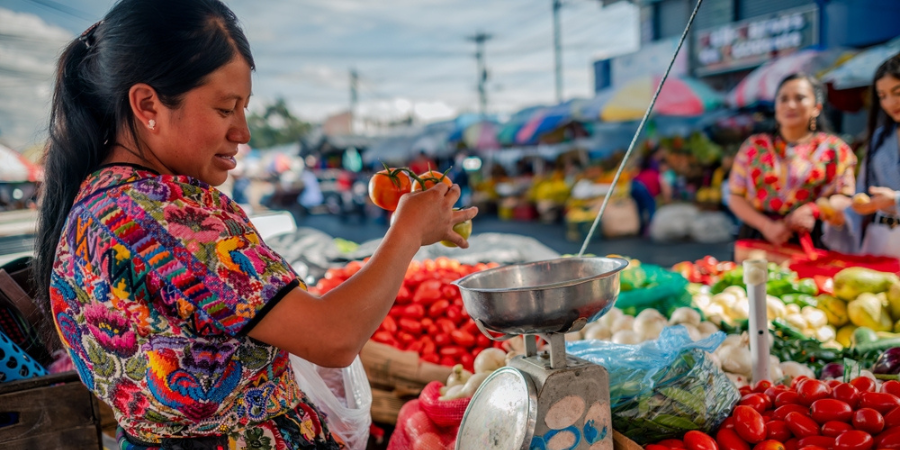
A key new feature of this 2025 edition is greater freedom in the planetary health diet, with flexible reference values and potential exchanges between food groups. It can therefore be adapted to a multitude of dishes from different cultures and agro-ecosystems, and to individual preferences. For example, the Commission suggests two small servings of foods of animal origin per day, or a single weekly dish with 80 to 100 g of meat, as is already customary in many food cultures that spread out meat in soups and stews. Various food models are already aligned with this framework: indigenous diets (Brunel et al., 2025; Armes et al., 2024), the Mediterranean diet (Hu, 2025) and all diets based on whole grains, tubers, many vegetables, pulses and small amounts of fish or meat (LeBlanc et al., 2024).
The EAT-Lancet Commission therefore encourages the protection of traditional diets, as they limit the transition to diets based on ultra-processed products and maintain high nutritional quality. However, the experts also stress the need for food supplements, fortified foods and nutritionally balanced ready-to-eat products in specific settings – regions facing food insecurity, diets dominated by starchy foods, humanitarian crises – as well as the importance of considering the reality of preparation time and the availability of fuel, cooking equipment or refrigeration.
Examples of traditional meals that are compatible with the planetary health diet


Justice, a condition for success and a driver of transformation towards sustainable food systems
Besides the economic inequalities that deprive almost a third of the world’s population of access to healthy food (FAO, 2025), the report also identifies environmental and social injustices. Some populations are already suffering from extreme temperatures and dangerous levels of pollution, with increased impacts on rural communities, women, indigenous populations and people living in poverty (Domínguez et al., 2020). These environmental injustices exacerbate food insecurity and undermine livelihoods. Today, a third of workers in the food system – and millions of women in particular – have inadequate incomes and work in precarious conditions (Jain et al., 2023). To address these three challenges, the EAT-Lancet Commission calls for justice to be placed at the heart of the transformation of food systems, as both the goal and the means of achieving it. The aim is to guarantee a universal right to food, a healthy environment and decent work.
Food systems under pressure, at the crossroads of health, environmental and economic issues
Since the EAT-Lancet Commission’s report was published in 2019 (Willett et al., 2019), the world’s food systems have faced a succession of crises: geopolitical instability, rising prices, a pandemic and an increasing number of climate shocks. These pressures are exacerbating existing vulnerabilities and disrupting access to food for billions of people. Despite sufficient global calorie production, most diets lack diversity, which is leading to a growing burden of non-communicable diseases, while over 30% of the world’s population cannot afford a nutritionally balanced diet. Furthermore, food is now the main driver for exceeding planetary limits. At the same time, profound injustices are growing: underpaid farm workers, populations overexposed to pollution, and healthy diets that are inaccessible and unaffordable for billions of people.
For its 10th edition, the EGEA Conference will focus on consumers’ current needs, expectations and opportunities in fruit and vegetable consumption. The aim is to formulate recommendations for making our food systems more sustainable, in particular by improving adherence to advice concerning fruit and vegetables. This event will place the consumer at the heart of the discussions by adopting a comprehensive “food systems” approach. It will give a voice to experts from a variety of backgrounds and will focus on examining the diversity of systems and consumption patterns around the world. See you there in Montpellier from 7 to 9 October 2026!